A Brief History of Burton Latimer - III - Employment
Summary researched and compiled by John Meads
Like many other places, there is little written evidence to tell us what life was like in Burton Latimer after the Domesday Book had provided us with a ‘snapshot’ in 1086.
17th century
However, Burton Latimer, like most other similar villages, remained a predominately farming community until the mid 1800s and then commerce and industry began to replace the declining agricultural and home weaving industries. The importance of agriculture is shown by number of former farmhouses in the town, and others have disappeared over the years.

The location of the mills in Burton Latimer
The north mill site in
After having been a corn mill since medieval times, references have been found to the north mill having been used as a fulling mill (1733), cotton mill (1794), silk mill (1826); the manufacture of worsted cloth (1838) and carpets (1851); a woollen mill (1853) chicory and mustard grinding and flour (1861-76) and then back to flour and animal feeds production again before the manufacture of breakfast cereal began in 1932.
The south mill, in
There were once two windmills. One was situated on the
The other windmill stood in the fields north-east of the back road to Finedon and, for at least fifty years from the 1760s, it belonged to Thomas Garrett who also owned the nearby water mill. It was probably demolished in the second half of the 19th century.

The windmill in Cranford Road c.1906
After the arrival of the railway in 1857, the gradual transformation of the farming village to a small manufacturing town began.
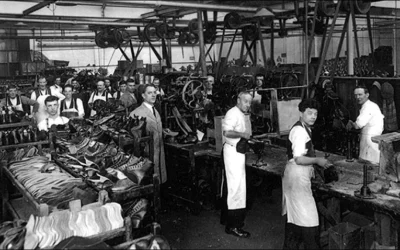
Lace making had offered the women and girls an alternative to work on the land or domestic service, but then work in the new boot, shoe and clothing factories provided more opportunities for both men and women (see image at foot of page).
The first clothing factory, staffed mainly by women, was opened by Frederick Wallis and John Linnell (a Burton Latimer farmer’s son) in 1885 and the first boot factory was built by Henry Whitney and Joseph Westley in 1898.
Ironstone Mining employed many men from the 1870s right up to the early 1920s when the ironstone ran out in Burton Latimer but many miners and quarrymen continued to travel to work at
Brick and tile making started the 1850s and employed many men and boys until the early 1900s.
The success of the town’s entrepreneurs, many of whom had started their businesses in home workshops and then later built shoe factories, meant that working in the footwear industry was soon the occupation of the majority of male workers. In 1923, there were four large factories making boots and shoes, a leather tannery and seven clothing manufacturers employing hundreds of women and girls. Several of the factory owners and businessmen were responsible for providing amenities which benefited the whole community.
The The
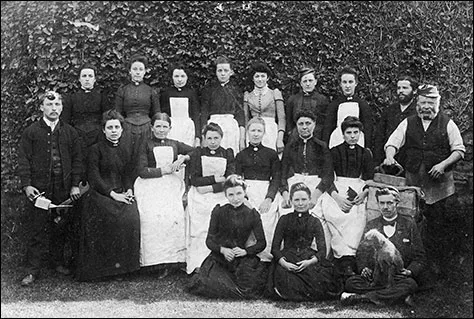
Workers at Wallis & Linnell’s clothing factory c.1900